Monitor Audio Platinum 3G – Technology Overview
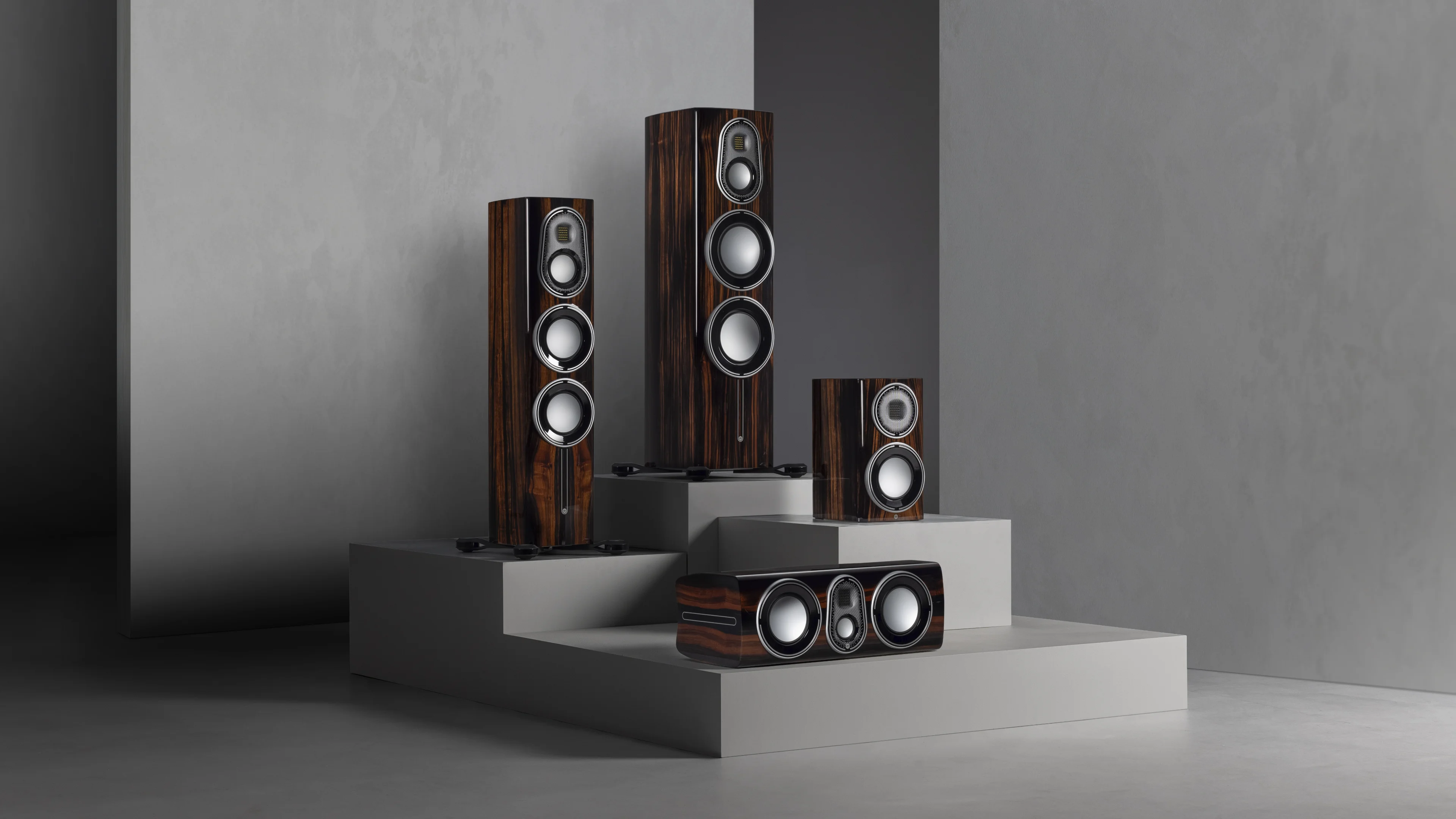
Monitor Audio Platinum 3g (Third Generation) launched for the brand’s 50th anniversary, represents a fundamental engineering upgrade. It is a design built from the top down, utilizing trickle-down technology from the flagship Hyphn to redefine the reference-level performance from this well-established titan of British hi-fi.
The following analysis details the technological leaps of the 3G generation compared to its predecessors, focusing on mechanical upgrades and measurable acoustic outcomes.
1. Transducer Evolution: The MPD III High-Frequency Transducer
The cornerstone of the 3G’s technical superiority is the MPD III (Micro Pleated Diaphragm) transducer. This is not merely an iteration of previous AMT designs; it is the exact same high-frequency unit developed for the flagship Hyphn.
- Frequency Extension and Linearity: The MPD III extends the tweeter’s passband to above 60 kHz, a significant increase from the 40 kHz limit of the previous generation. By pushing the “breakup modes” well outside the range of human hearing, the 3G achieves a flatter, more consistent response within the audible spectrum.
- Square Radiating Surface: Unlike rectangular ribbons that can suffer from vertical beaming, the MPD III’s square area provides equal directivity in both horizontal and vertical planes. This creates a wider, more stable “sweet spot” and a more holographic soundstage. Designed to perform at its best off-axis.
- Optimized Rear Volume: The rear chamber has been mathematically optimized to minimize ripples in the audible range, resulting in a transient response that is lightning-fast and free of the metallic “ringing” often associated with traditional dome tweeters.
This makes it one of the very best performing tweeters on the market competing with speakers well above its price range.
2. Driver Material Science: The RDT III “Piston”
The 3G series introduces the Rigid Diaphragm Technology (RDT III) across the midrange and bass units. This represents the most advanced sandwich cone construction in Monitor Audio’s history, designed to behave as a near-perfect piston.
- The Triple-Layer Sandwich: The cone consists of a C-CAM (Ceramic-Coated Aluminum Magnesium) front skin, a Nomex® honeycomb core, and a newly developed dual-layer carbon fiber back skin.
- Breakup Control: By replacing the single carbon back layer of the 2G series with a matching dual-skin, Monitor Audio has significantly increased the cone’s structural rigidity. This pushes internal resonance modes further out of band, allowing for a cleaner, more transparent sound.
- These drivers utilise a high-strength neodymium magnet and an underhung, edge-wound voice coil. This configuration keeps the voice coil within a precise magnetic gap at all times, resulting in a measured reduction in THD (Total Harmonic Distortion) and a more lifelike vocal texture.
This design prioritizes thermal stability and linear response, ensuring that the bass remains articulate and “tuneful” rather than boomy, even during demanding dynamic peaks.
3. Cabinet Architecture and Internal Mechanical Isolation
All of the speakers in the Platinum 3G series utilise cabinets with a high-mass, low-resonance structure built to be acoustically “inert.” They utilise laminated layers of MDF with wall thicknesses ranging from 18mm to 21mm, capped by a massive 36mm thick front baffle. The below features further set it apart from their competitors:
- Advanced Bracing: A sectioned cutaway reveals a complex network of horizontal and vertical supports. These supports do more than just stiffen the box; they are strategically placed to isolate mechanical energy from each driver, preventing intermodulation distortion.
- Tapered Midrange Enclosure: The midrange driver resides in a dedicated internal enclosure featuring specialized damping material. This serves as an acoustic “sink,” absorbing the rear wave and controlling standing waves—a technique similar in outcome to metamaterial-based damping. (Platinum 100 model excluded)
- Crossover Decoupling: In a significant move for signal purity, the crossover assembly is mounted on the plinth, completely isolated from the main wooden enclosure. This ensures that the delicate capacitors and inductors are not modulated by the vibrations of the woofers, leading to a quieter electrical environment.
- Elliptical Filters: The crossover utilizes elliptical filters to minimize driver breakup and reduce SPL ripple. This ensures that the transition between the tweeter and midrange is mathematically seamless.
- Lacquer and Finish: The aesthetic is bolstered by 16 layers of lacquer, creating a piano-gloss finish that is as durable as it is deep. This high-quality surface treatment is specifically designed to be resistant to the microscratches commonly caused by dusting.
4. Precision-Engineered Components: Feet and Outriggers
Last but not least, Monitor Audio has overhauled the grounding and stability of these speakers with a new outrigger foot assembly that replaces the cumbersome plinths of the past.
- Ten-Part Construction: Each outrigger foot is a precision-engineered assembly consisting of ten individual parts. This high-strength architecture is designed to allow “walkability” (moving the speaker into position) without the risk of bending the spikes or harming the cabinet’s structural integrity. This also adds to isolation and stability.
- External Leveling: One of the most practical upgrades is the top-access adjustment system. Users no longer need to lift or lean the speaker to level it; the spikes can be adjusted from above, ensuring the speaker is perfectly decoupled from the floor with minimal effort.
Conclusion.
The consensus among high-end reviewers is that the Platinum 3G represents a successful pivot toward extreme transparency and technical accuracy. By utilizing the flagship MPD III tweeter and the refined RDT III cone architecture, Monitor Audio has moved away from a familiar “house sound” in favor of a neutral, low-distortion transparent sound signature.
The range’s greatest achievement is its micro-dynamic precision and its ability to remain fully coherent at lower volumes. While its honest, “polite” midrange and high-energy top end require a thoughtful approach to system matching, the measurable result is a remarkably refined speaker that prioritizes speed, air, and musical truth above all else.