


Short summary
Every bit a true REL, just smaller, enriching modest systems with natural bass. It brings REL’s full connectivity, an all-new aluminium cone for stiffness and punch, and a Class D amplifier, for tight spaces.
Key info
- Compact subwoofer w/ full REL connectivity
- All-new aluminium cone for greater stiffness
- Added punch from the stiffer driver
- Powerful, reliable Class D amplifier
- Enriches even modest systems
- Suits apartments, flats and studies
- Ideal where space is limited
Specifications
| Weight | 6.8 kg |
| Dimensions (HxWxD) | 241 x 216 x 260 mm |
| Active / Passive | Active |
| Driver Size | 6.5 in |
| Amplifier Class | D |
| Subwoofer output power | 100 w |
| Bass Extension | -6dB at 37 Hz |
| Analog inputs | Neutrik Speakon | Low Level single RCA | LFE RCA |
| What's in the box | Mains Lead | Neutrik Speakon | User Manual |
Description
Tzero MKIII, T/5x and T/7x at aglance.
REL’s compact subwoofers, side by side. Here is the Tzero MkIII, the smallest and least expensive REL, alongside the two Serie T/x models above it, showing what your money buys at each step.
|
Tzero MKIII
This model
|
T/5x
|
T/7x
|
|
|---|---|---|---|
| Price | £399 | £629 | £899 |
| Woofer Size | 6.5 in | 8 in | 8 in |
| Bass Extension | -6dB at 37 Hz | 32 Hz at -6 dB | -6dB at 30 Hz |
| Subwwofer Output | 100 w | 125 W | 200 W |
| Dimensions (HxWxD) | 241 x 216 x 260 mm | 307 x 300 x 313 mm | 320 x 356 x 363 mm |
| Weight | 6.8 kg | 14.3 kg | 17.5 kg |
The long read.
The Tzero MkIII is REL’s entry point and the smallest subwoofer the company makes. It is built for the kind of system most subwoofers are too big for: a pair of compact standmounts in a small room. It is a sealed box around 24cm on each side, and it has the same high-level connection as every other REL, which is the main reason to choose one over a generic sub. It is not a home cinema subwoofer and does not pretend to be. Its job is to supply the bottom octave a small speaker cannot reach, and to do it quickly and quietly enough that you hear bigger speakers rather than a separate box.
Brief product overview
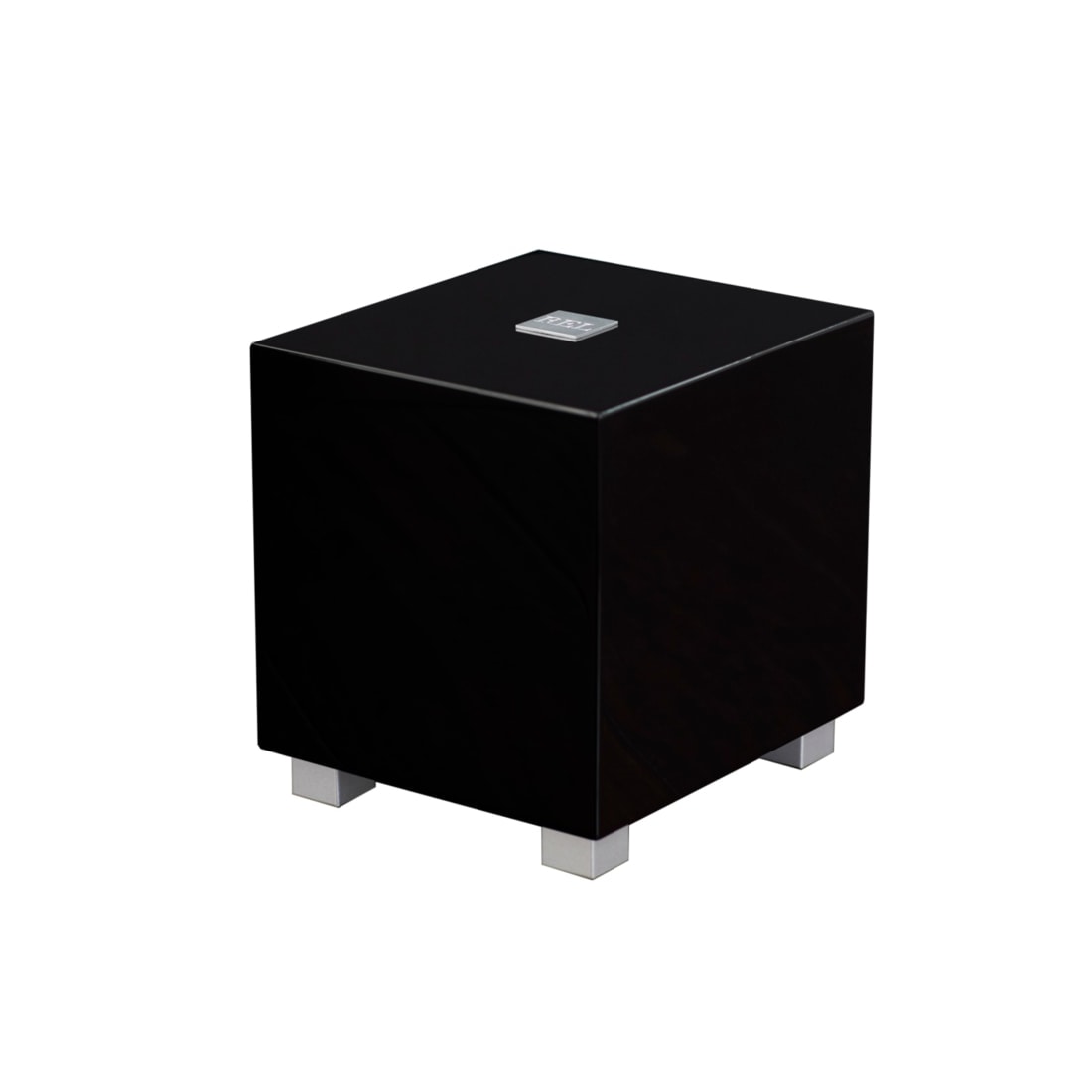
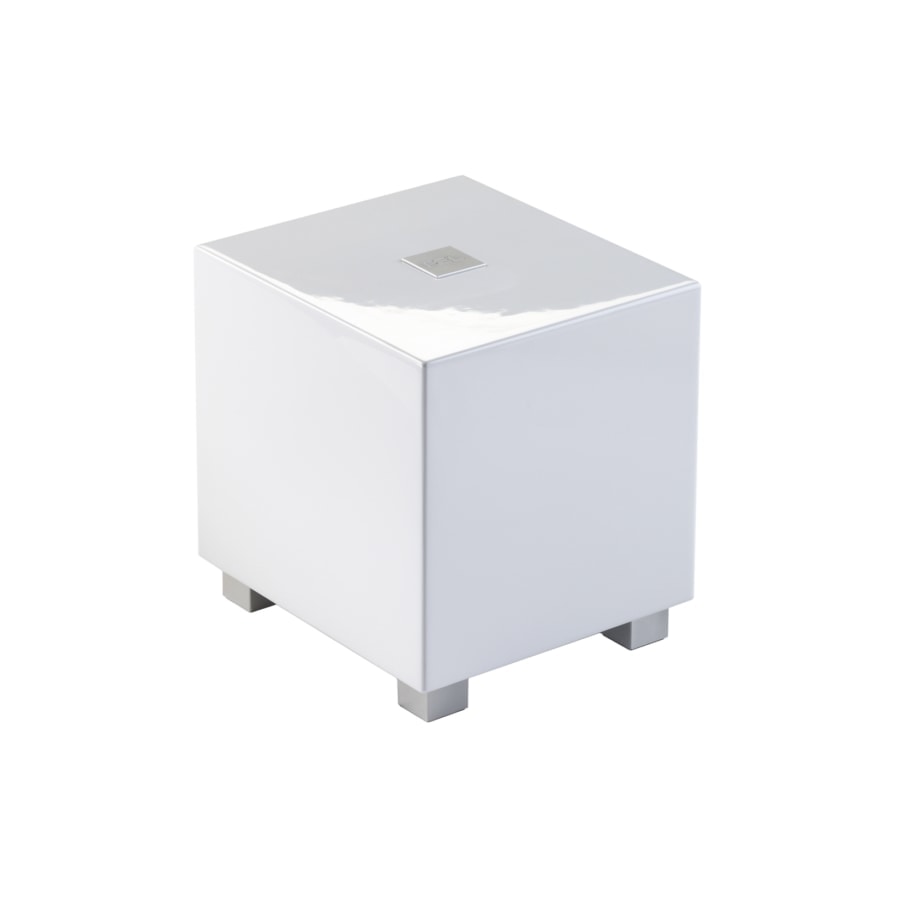
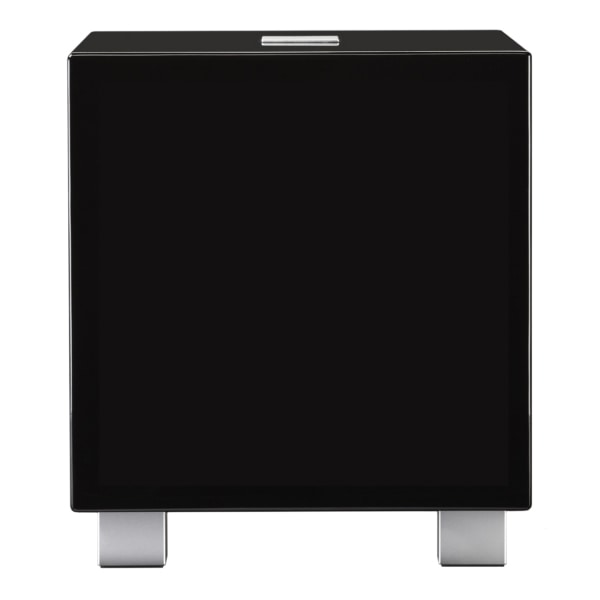
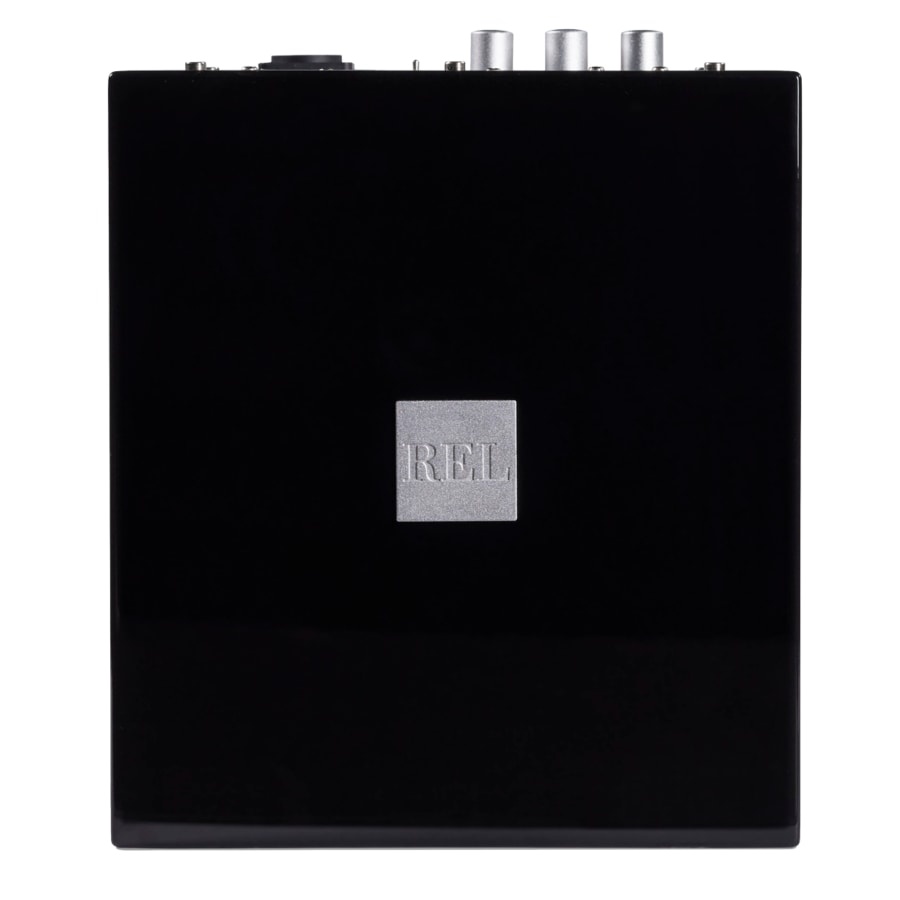
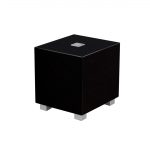
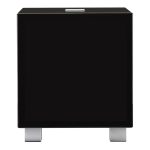
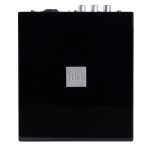
The Tzero MkIII is a sealed, down-firing subwoofer with a 165mm (6.5-inch) long-throw driver using a new aluminium cone on a steel chassis. The stiffer cone is the main change for the MkIII. A 100-watt NextGen Class D amplifier drives it, and bass extends to 37Hz at −6dB in a real room. Connectivity is the full REL set. There is a high-level Neutrik Speakon input that takes its signal from the amplifier’s speaker terminals, a low-level RCA input for active speakers or a pre-out, and a separate .1/LFE input with its own level control, so film and music levels are set independently. It also has a phase switch, the fast 8ms delay filter set used in REL’s larger models, the same input filters, crossovers and limiters as those models, and an auto-standby circuit that wakes at very low signal levels. The cabinet is finished in five coats of gloss black or gloss white lacquer and measures 216mm wide, 241mm high and 260mm deep, weighing 6.8kg. The HT-Air MkII wireless kit is available separately if a cable run is impractical.
How it sounds
A good subwoofer makes the main speakers sound larger, not boomier, and the Tzero MkIII does this well. The sealed cabinet and stiff aluminium cone keep the bass tight and quick to stop, so bass lines keep their pitch and timing rather than blurring into a hum. Because the high-level input carries the same signal and character as the main speakers, the join between them is hard to hear once set up. The benefits reach beyond the bass itself: the soundstage gains depth and width, and small speakers stop sounding strained. The limits are the honest ones for a 6.5-inch driver. It will not pressurise a medium or large room, and films will gain weight and texture rather than the deepest rumble. In the room it is designed for, around 14 square metres, it is a real improvement rather than a gesture.
What we’d partner it with
The Sonus Faber Lumina I is a natural match. It is a compact two-way standmount quoted to about 65Hz, so the Tzero covers almost exactly the octave it is missing. The Lumina I’s warm, refined voice benefits from support underneath rather than more volume. The Revival Audio Sprint 3 (87dB, 6 ohms, quoted to 55Hz) is a good alternative, as is the Technics SB-C600, a coaxial standmount whose 83dB sensitivity makes the subwoofer’s contribution especially useful.
For amplification, the Bluesound Powernode N331 makes the pair and sub a complete system. It delivers 100 watts per channel from its DirectDigital gallium nitride output stage, with BluOS streaming covering Tidal, Qobuz, Spotify Connect, AirPlay 2 and Roon, and an HDMI eARC input for a television. It drives the Lumina I’s 4-ohm load comfortably and feeds the Tzero through its speaker terminals. The Technics SU-GX70 is an alternative with streaming and a moving-magnet phono stage built in. The Eversolo Play is another, adding a moving-coil phono stage and room correction. All three use Class D or full-digital output stages, which affects how the high-level lead is wired (see Ownership). Each has a subwoofer output, but the high-level connection is the one we’d use for music. On cabling, the supplied 10m Speakon lead covers the high-level run; for the main speakers, use a well-made cable of appropriate gauge. AudioQuest and Chord are the cable brands we stock.
Who shouldn’t buy it
If your room is larger than a small living room, study or bedroom, or your main speakers already reach into the 40s, the T/5x is the better starting point. It has an 8-inch driver, a 125-watt Class A/B amplifier and extension to 32Hz, in a box that is still discreet. The T/7x adds a 10-inch passive radiator and 200 watts for more depth and authority in a medium room. If film matters as much as music, a Serie HT model such as the HT/1003 MkII (10-inch driver, 300 watts, 24Hz) will give the low-frequency effects channel the reach the Tzero does not have. And if you plan to use a stereo pair, it is worth considering whether one larger REL would serve the room better.
The subwoofer and the rest of the system. Here’s how we’d build around it.
A System For Smaller Rooms
A 6.5-inch sealed subwoofer completing a compact 84dB standmount driven by a 100-watt streaming amplifier.
Useful Notes
Start with the Tzero in a corner behind one of the main speakers, standing on a firm floor with its feet clear, since the driver fires downward. Move it along the wall in small steps and listen until the bass is even and the sub itself is hard to locate. Connect the Speakon lead’s other end to the amplifier: red to the left positive terminal, yellow to the right positive, and black to ground. With a Class D output stage such as the Powernode’s, REL advises taking the black wire to the amplifier’s chassis ground rather than a negative speaker terminal. If there is no dedicated earth point, ask us or REL before connecting. Leave the main speakers running full range. Set the crossover low, near where the main speakers roll off, then raise the high-level volume until the bass is felt rather than heard. Try both phase positions and keep the one that sounds fuller at the listening seat. If you add a television with its own subwoofer signal, the .1/LFE input takes it with a separate level control, leaving the music settings untouched. Where a cable run to the sub is impractical, the HT-Air MkII wireless kit replaces it.
User reviews


There are no reviews yet.
Leave a review